
repentance prayer
Repentance Prayer: What to Pray, and What Makes It Stick
By Rising Son Team, Coach led men's program
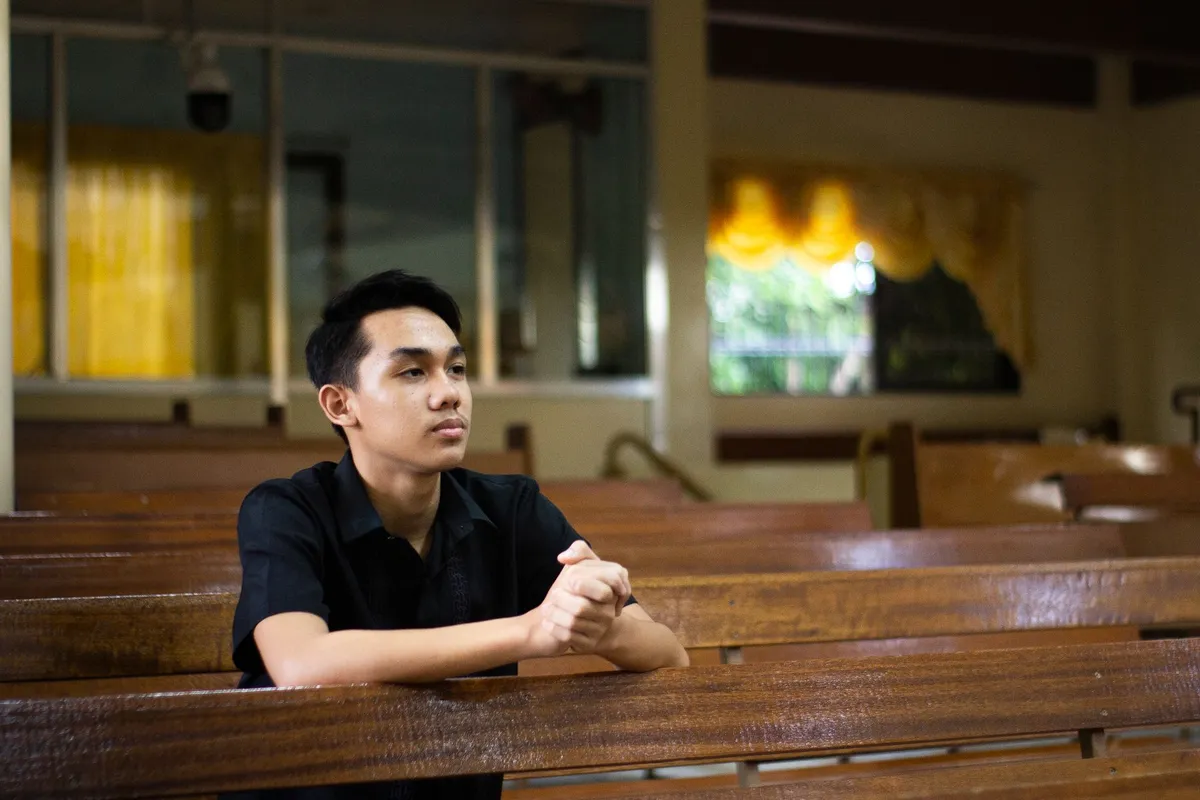
Photo by Nothing Ahead on Pexels
Photo by Nothing Ahead on Pexels
A repentance prayer is not a formula and there are no required words. It is admitting plainly what you have done, asking to be forgiven, and turning. If you want one to pray right now, it is directly below.
The rest of this page is about the part that decides whether it is the first of a new set or the ninth of an old one, because a great many men have prayed this sincerely for years while nothing in their lives moved at all.
Say it out loud if you can. Out loud is different from in your head, and you will notice the difference immediately.
God, I am not going to dress this up. I have done this, and I have kept it hidden, and I have lied about it by saying nothing. I am sorry for the damage and I am sorry for the hiding, which I think did more of the damage than the thing itself. I cannot fix what it has cost other people. I am asking you to forgive me, and I am asking you to make me willing to tell the truth about it to someone other than you. I want to be a man with nothing left to hide. Start me there.
Change the words. They are not the point, and any tradition you belong to will have older and better ones. What matters is that the prayer is specific rather than general, that it names the concealment and not only the act, and that it asks for something to happen next rather than only for the feeling to lift.

The words underneath the English are physical rather than emotional, which is the first thing worth knowing.
Neither word means feeling terrible. That distinction is made explicitly in the text: Paul writes to the Corinthians that godly grief produces a repentance that leads to life and leaves no regret, while worldly grief produces death.
Sit with that one, because it is the whole thing. There is a kind of sorrow that turns a man around, and a kind that only makes him smaller. The second kind is the one most men in this situation are running on, and it is generally mistaken for humility. It is not humility. It is a private loop, and it goes nowhere.
Here is the pattern, and if it is yours you will recognise it in about two sentences.
Something happens. Afterwards there is the drop, the self-disgust, and a genuinely sincere prayer, often the most honest thing said all week. There is relief. There is a resolve that feels different this time. Three weeks later, sometimes six, it happens again, and the whole cycle runs from the top. Over a decade, a man can complete that circuit a hundred times and never once tell another human being that it exists.
Brannon puts the mechanism plainly. If I believe nobody could love me as I actually am, I live in hiding. Hiding breeds shame. And shame breeds the acting out. Which means the loop is not failing to work. It is working exactly as built. The private prayer discharges just enough of the shame to make the next week survivable, and the hiding, which is the engine, stays completely untouched.
That is why more sincerity does not help. The prayers were already sincere. Praying harder is simply another attempt to solve it alone, and alone is the variable causing the problem.
One thing, and we hold this as firmly as anything on this site. Shame lives in secrecy, and it is other people who kill it.
A man cannot shame himself into change, and he cannot get out of this in isolation. The thing that actually breaks the cycle is saying the true thing out loud to another human being who is doing the same work and who does not flinch. Everything else we have watched work runs downstream of that.
The traditions have always known this, which is worth noticing if you have been treating confession as optional or archaic. James says to confess your sins to one another and pray for one another. To one another. There is a reason that instruction is not confess your sins privately and try harder.
Tyler describes what the right room looks like better than anybody. A safe landing spot: people who can actually do the thing you are trying to do, who will hold your stuff, meet you with empathy rather than horror, and still push you to keep changing. Both halves matter. Soft enough to land on, firm enough that you do not simply lie there for a year.
That can be a pastor, a therapist, a recovery group, or two men who will meet you every week and ask the question properly. It cannot be the internet, and it usually should not be your wife alone, because a man whose only accountability is the person he hurt most has built something that fails in exactly the way you would expect.
Pray it anyway, and be honest about that in the prayer rather than manufacturing the feeling first.
Men get stuck here in two opposite ways. Some wait to feel wrecked enough to deserve to ask, which is a performance requirement nobody ever imposed except themselves. Others notice they feel numb, decide that proves they are beyond it, and stop. Numbness after a long stretch of this is ordinary rather than diagnostic. It is what happens to a system that has been managing a secret for years.
Say the true sentence: I do not feel what I think I should feel about this, and I want to. Honesty about the absence is more use than a convincing performance of the presence.
Then the prayer is the start of the work and not a substitute for it, and the text is unusually concrete about this.
Zacchaeus does not deliver a speech. He gives half of what he owns to the poor and repays four times over anybody he defrauded, and nobody asks him to. The turning shows up in what he does with his money by the end of the afternoon. That is the shape of it.
Which means the honest next steps are unglamorous. The full account rather than the version you think she can take. Restitution where anything can actually be restored. And then the long stretch where nothing dramatic happens and you simply become somebody with nothing left to hide, for long enough that the people around you can feel it.
One hard thing, said once. Her forgiveness is hers to give and it is not yours to collect. Repenting genuinely does not put anybody in your debt, and a man who repents in order to be owed something has not yet turned around, he has changed tactics. Do it because it is true. What she does with it is a separate matter and it belongs entirely to her.
The short one at the top is for the morning after. This one is for a man who has done real damage to a marriage and knows it.
God, I have hurt the person I promised to protect, and I did it over a long time and on purpose, one small decision at a time. I have let her believe things that were not true. I have let her think she was imagining it. I am not going to ask you to make this quick or to make her feel better about me, because those are not mine to ask for.
Give me the nerve to tell the whole thing in one piece instead of in the pieces I can survive. Take away my appetite for managing what she thinks of me. Show me what can actually be put right and let me do that part without being thanked for it. And when she is angry, keep me from making her anger the subject. Make me somebody with nothing left to hide, and keep me there when it stops feeling like progress.
Notice what is not in it: any request about the outcome. Praying for her to stay is praying for a decision that is hers. You can want it, and it is not a thing to ask to have arranged over her head.
Related, and not identical, and the difference matters if you grew up hearing one of them.
The sinner's prayer, in the forms it circulates in, is a prayer of first commitment: acknowledging your need, accepting what was done for you, and turning your life over. It is generally understood as a beginning. A prayer of repentance is something a believer does repeatedly across a lifetime, over specific things, and none of the traditions treats it as a one-off.
Worth adding, since it comes up: the sinner's prayer is not itself in the Bible as a set text, which is a point of genuine debate among traditions rather than a gotcha. What is in the text is the pattern underneath both, which is confession, turning, and being met. Whichever words you use, that pattern is the thing doing the work.
Then you are in the ordinary place rather than the disqualified one, and the thing to look at is the process rather than your sincerity.
Nobody runs an endurance race by deciding to one day. They follow a process, do hard things consistently, lean on people, and show up on the days they do not feel like it, without knowing on any single day whether it is working. I tried and it did not work almost always turns out to mean the process got skipped, not that the man is broken.
So the question after a repeat is not how do I feel worse about this more convincingly. It is: who knows, what is actually in place, what happened in the hours before, and what is the next honest thing. If the answer to who knows is still nobody, that is where the work is, and no number of prayers said alone will substitute for it.
The thing to carry out of here: repentance is not a heavier weight to pick up. In the tradition it is the road out from under one. If your practice of it keeps leaving you with more to carry and more to hide, something has gone wrong in the practice and not in you. Pray the prayer. Then go and tell a person. That second part is the turning.
Rising Son is weekly groups online, and a three day retreat in Idaho. Same men, same time, every week. The video walks through what that looks like before you decide anything.