
what does the bible say about divorce
What Does the Bible Say About Divorce? The Passages, Honestly
By Rising Son Team, Coach led men's program
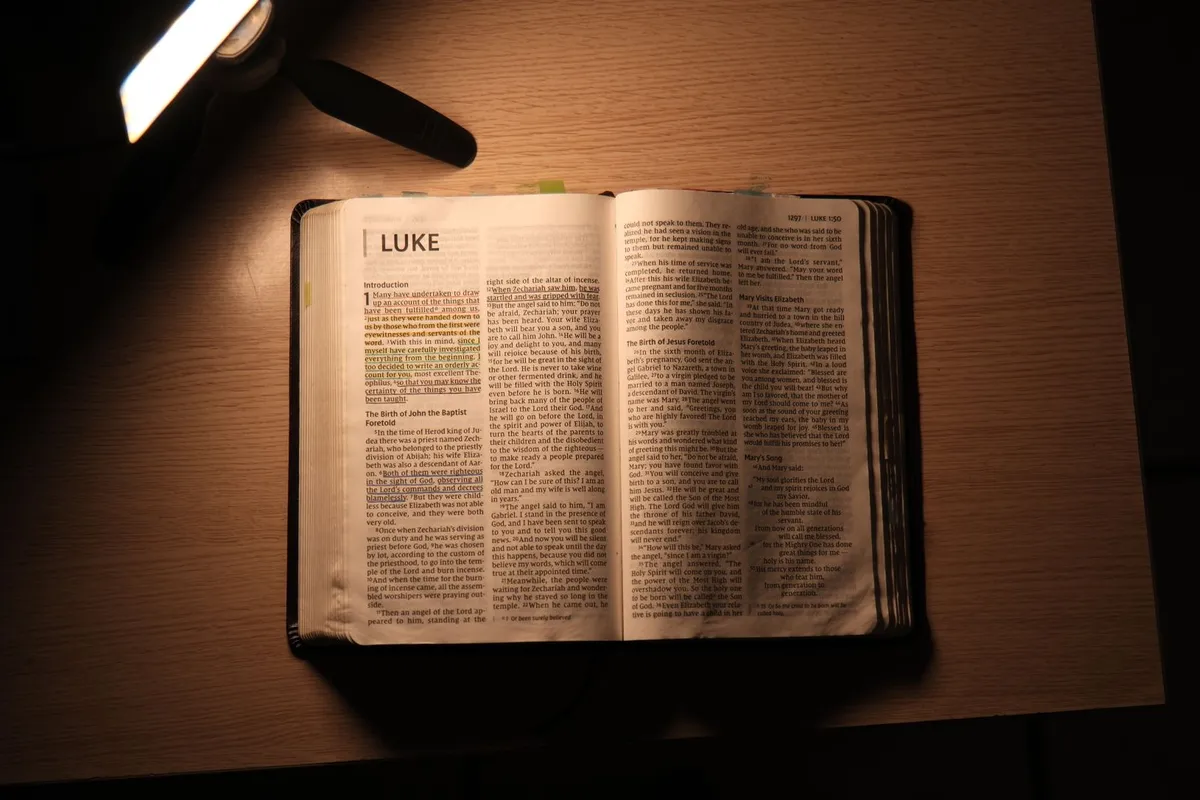
Photo by Calil Encarnación on Pexels
Photo by Calil Encarnación on Pexels
What does the Bible say about divorce? In short: it treats it as a grief rather than a neutral option, and it permits it in at least some circumstances. Where faithful readers have disagreed for centuries is over how wide those circumstances are, and they disagree for a reason that is visible in the text itself.
Most pages on this subject present one reading as the settled answer. That is not dishonest so much as incomplete, and if you are the person actually facing this decision, the incomplete version is not much use to you.

Three live questions, none of which has ever been settled to everyone's satisfaction.
Which is why the question of what your tradition teaches is a different question from what the Bible says, and it is worth being clear with yourself about which one you are asking. Your tradition's position is a real thing with real weight. It is also a reading, and it has been read otherwise by people every bit as serious.
Honestly: the passages do not address it directly, and pretending they do is not doing anybody a service.
What has happened over the last few decades is that a great many traditions, including conservative ones, have concluded that a spouse who is violent has abandoned the covenant in the sense Paul is describing, whatever their physical address. Others reach the same conclusion through the Malachi passage about covering oneself with violence. Others still hold that separation is permitted and divorce is not.
We are not going to arbitrate that, and we are going to be blunt about one thing regardless of where it lands doctrinally: no reading of any passage requires anybody to stay in a house where they are in danger. If that is your situation, the immediate question is safety and not interpretation. In the United States the National Domestic Violence Hotline is 1-800-799-7233.
This is the part of the subject we work in every week, and there is one distinction that gets lost constantly.
Every major reading agrees that infidelity permits divorce. None of them requires it. That gap is where an enormous amount of unnecessary pressure gets applied to people, in both directions: told they must leave because they are permitted to, or told they must stay because they are permitted not to leave. Neither follows.
The other thing worth naming: people are frequently pushed toward reconciliation before they have been given an accurate account of what they are reconciling to. Forgiveness and a decision about the marriage are separate questions, and the first one does not settle the second. A person who has genuinely forgiven can still be working out what to do, and that is not a sign the forgiveness was fake.
This is often the question underneath the question, and it splits the traditions further than divorce itself does.
Broadly, there are three positions in circulation. The most common among Protestant traditions is that where the divorce was on permitted grounds, remarriage is permitted too, since a divorce that does not free a person to remarry is doing very little for them. A stricter reading holds that the marriage bond persists regardless, so remarriage while a former spouse lives is not available. Catholic teaching approaches it differently again, through annulment, which asks whether a valid marriage existed in the first place rather than whether this one may be ended.
We are not going to tell you which of those is correct. What is worth saying is that this is a question to take to your own tradition and to a person, not to a search engine, because the answer genuinely depends on a framework rather than on a verse, and because the people giving it should know your actual circumstances.
One practical note from watching people go through it. A number of people delay dealing with the marriage in front of them because they are already arguing about the remarriage question years ahead of themselves. The two decisions are separated by a long time and a great deal of work, and collapsing them tends to freeze everything rather than clarify anything.
We will not tell you to divorce. A therapist making that call for someone is out of line, and that stays true even when the answer looks obvious from the outside, because we are not the ones who have to live in it afterwards.
We will also not let you hide from it. If you already know, deep down, and keep asking a question you have quietly answered, the honest job is to reflect that back to you until you stop pretending you do not know. Not deciding is also a decision, and it is usually the most expensive one available.
One thing we would gently point out about this particular search. A lot of people arrive at it hoping the text will hand down a verdict so that nobody has to be responsible for the choice. That is understandable, and it is not what any of these passages are for. They set the seriousness of the thing. They do not read your marriage.
Brannon uses two lists for this, and he is explicit that they are not an answer machine. Look at the other person first.
Then look at yourself, and rate each one from one to ten rather than answering yes or no.
If you are ignoring most of those, you are probably staying out of fear rather than choosing to stay, and those two are not the same thing even when they look identical from the kitchen. That is worth working through properly rather than at two in the morning.
The thing to carry out of here: the passages are serious and they are narrower than the people quoting them at you usually are. They do not require you to stay somewhere dangerous, they do not settle the question of your own marriage, and they were never written to save anybody from having to be a person who decides. Get the clearest possible view of what is actually in front of you, get support that is not just the people with an opinion about the outcome, and then make the call yourself.
Weekly groups online, and a three day retreat in Idaho. If there is a man in your life who is ready to start, the video walks through exactly what he would be walking into.