
how to reconnect to your husband
How to Reconnect With Your Husband
By Rising Son Team, Coach led men's program
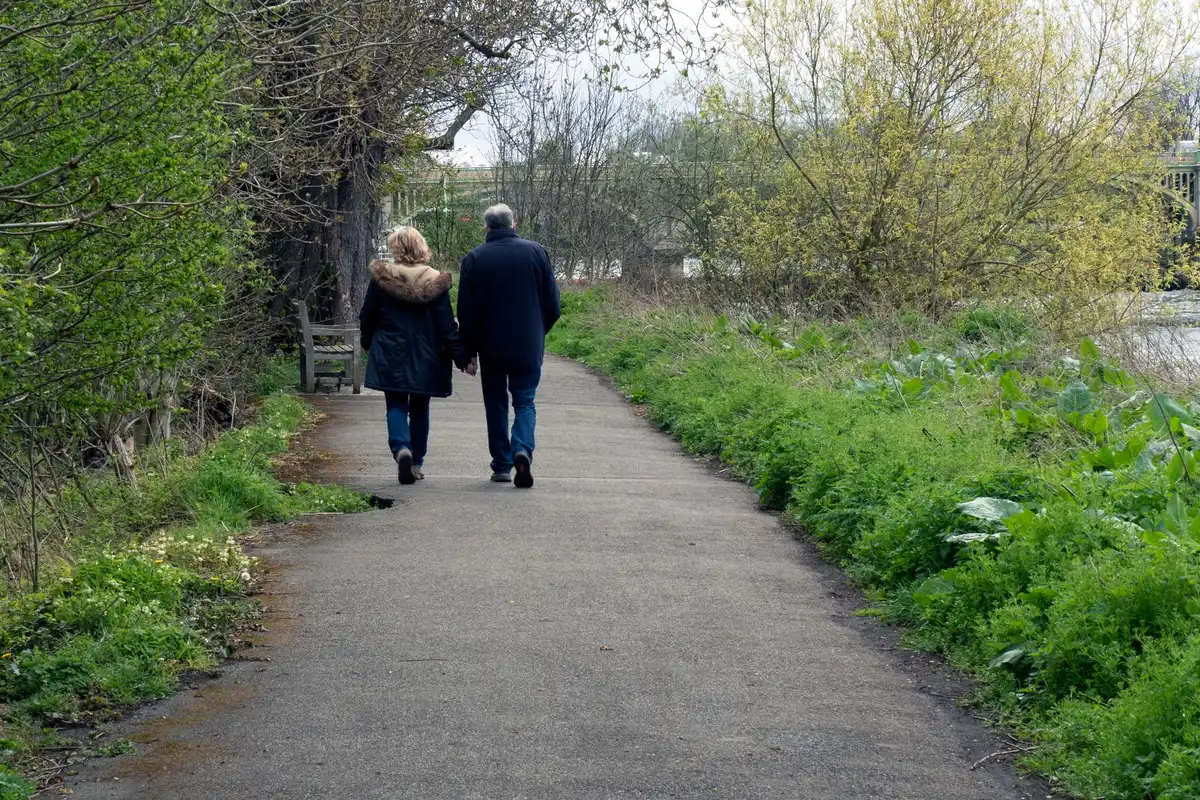
Photo by JR Bradbury on Pexels
Photo by JR Bradbury on Pexels
If you are trying to work out how to reconnect to your husband, the honest answer is that it depends almost entirely on why he went quiet, and nobody asks you that. You get handed a list instead. Plan a date night. Write him a note. Look at the wedding album. Ask about his day and really listen.
None of that is bad advice. It is just aimed at one specific cause, which is two busy people who drifted, and that is not why most men go quiet. If the reason is something else, you can run that whole list for six months, get almost nothing back, and end up convinced the problem is you.
We work with the men on the other side of this. Here is what is usually going on, what actually reopens someone, and the part of it that is not yours to fix.
Four reasons cover most of it, and each one needs something different from you.
You will not diagnose this from the outside and you do not need to. What matters is that you stop assuming it is the fourth one just because it is the least frightening.

Because effort aimed at a cause that is not there does not produce closeness. It produces exhaustion.
If he withdrew for the first reason, because being himself here has not gone well, then more planned time is more time to perform in. If he withdrew for the third, because he is managing something he has not said, then the gestures land as pressure on a man who already feels like a fraud, and he retreats further. In both cases you increase the effort, get less back, and quietly conclude you are the problem.
You are not. You were given a solution for a different problem.
This is the reframe Tyler comes back to, and it is worth sitting with because it removes an entire layer of pain that does not have to be there. There is a difference between not liking your partner's behavior and taking it personally. Those two get collapsed constantly, and the collapsing is what multiplies the suffering.
You are allowed to hate the distance. It crosses something that matters to you and you do not have to make peace with it. What you can put down is the second layer, the one that reads his silence as a statement about your worth, your body, or whether you are enough. His withdrawal is nearly always about what he is carrying and what he decided years ago about being known. It got aimed at you. It is not a verdict on you.
The honest hedge Tyler holds alongside it: this is not easy, and it is not the same as excusing anything. It only removes the extra weight that comes from making his choice mean something about you.
There is a companion idea from the same place that holds both halves at once. Your husband is doing the very best he can with what he has to work with, and he needs to do better. Both of those are true simultaneously, and neither cancels the other. That is the register worth staying in. It keeps you out of the two dead ends: deciding he is a villain, and deciding you have to accept this forever.
We work with men on exactly this, so we will say the part the other articles leave out. Sometimes a man goes quiet at home because his attention went somewhere else first. A friendship that became the best part of his week. A pornography habit that grew from a release valve into the thing organizing his evenings. A whole private life running alongside the shared one. In that case the distance at home is not the problem to solve. It is the exhaust.
This is not a reason to start searching his phone, and we are not telling you that is what is happening. Most of the time it is not. The reason to name it is simpler: if this is the cause, no amount of reconnecting will touch it, and you deserve to know that before you spend two more years trying harder.
If something in you already suspects it, that is worth taking seriously rather than talking yourself out of. What an emotional affair actually is covers the line a friendship crosses, and if the marriage has been quietly over for years rather than recently distant, silent divorce is the closer description.
You cannot do his half. You can make it safer to come out, and you cannot make him come out. A man who has decided not to be known does not get talked out of it by a better approach from his wife, and any article promising you a script that opens him up is selling you something.
What that means practically is a time limit on doing this alone. If you have been carrying the whole thing for months and nothing has moved, that is the point to get someone else in the room rather than to try harder. Counselling for a marriage break up covers what to do when your partner will not come, which is more common than people admit, and going on your own is not the consolation prize. And if you are further along than reconnecting, how to know if your marriage is over is the more honest page for where you are.
Say one true sentence about your own experience, with nothing attached to it and no response required. Then go do something side by side, in a car or on a walk, and ask one question without fixing anything he says. That is the whole first week. It is smaller than the twenty-five item lists and it is aimed at the thing that actually closed.
Rising Son is a program for men, run by two licensed therapists who are brothers, doing in-person work since 2017 with men between 35 and 55 who are rebuilding integrity after pornography, infidelity, and secrecy. Each retreat brings together more than thirty men for several days. A lot of the men in that room arrived because their wife found this work first and sent it to them, and there is nothing to be embarrassed about in that. If the quiet at your house has a cause he has never said out loud, this is the kind of room where men finally do.
One last thing. A husband who has gone quiet is usually not gone. He is behind something he built a long time ago, often before he met you, and men do come back out. It tends to happen slowly, sideways, in a car, over months. Not because someone finally found the right thing to say. Because it stopped being dangerous to be seen. If you want to see what that work looks like from his side, see who this work is for or get in touch.
Weekly groups online, and a three day retreat in Idaho. If there is a man in your life who is ready to start, the video walks through exactly what he would be walking into.